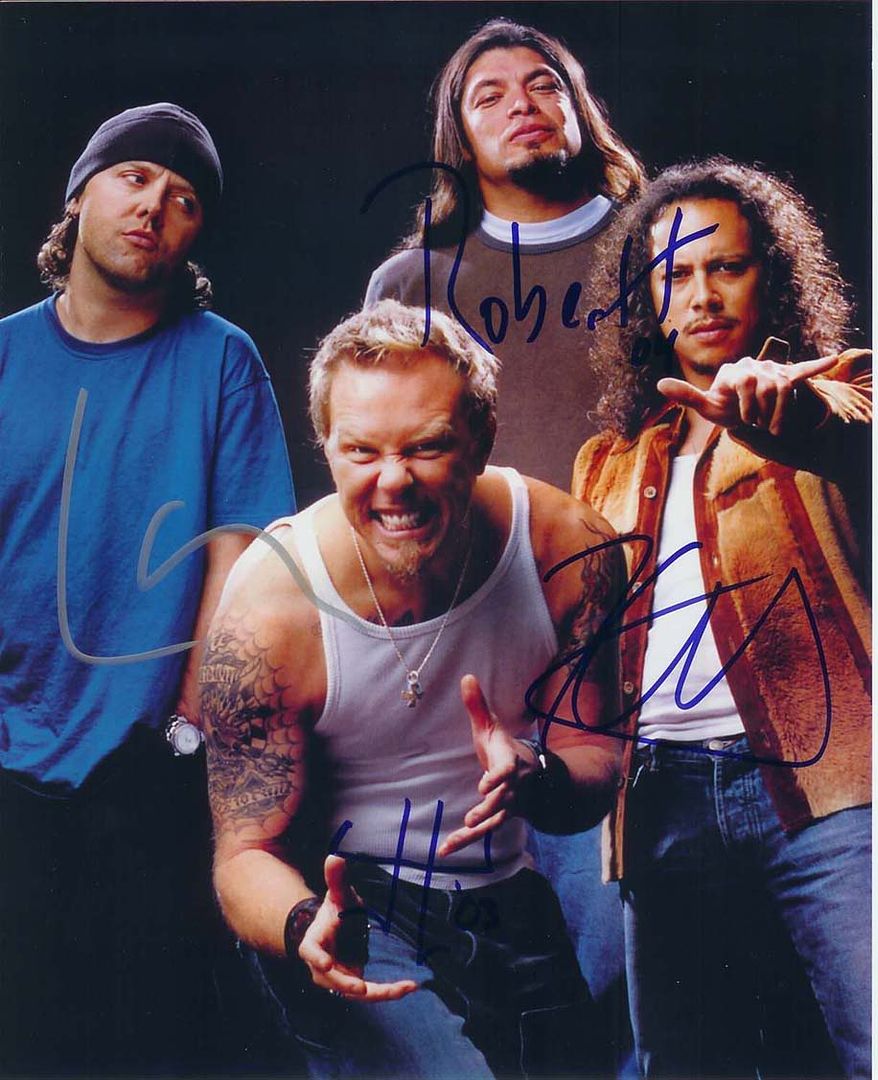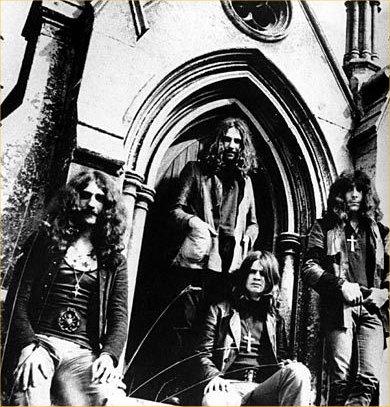
History Of Black Sabbath

Saturday, December 13, 2008


Black Sabbath are an English heavy metal band from Birmingham, England. Formed in 1968 by Ozzy Osbourne (lead vocals), Tony Iommi (guitar), Geezer Butler (bass), and Bill Ward (drums and percussion), the band has since experienced multiple lineup changes, with a total of twenty-two former members. Originally formed as a heavy blues-rock band named Earth, the band began incorporating occult- and horror-inspired lyrics with tuned-down guitars, changing their name to Black Sabbath and releasing multiple gold and platinum records in the 1970s.

As one of the most influential heavy metal bands of all time, Black Sabbath helped define the genre with releases such as 1970's quadruple-platinum Paranoid.[1] Black Sabbath has sold more than 100 million albums worldwide,[2] and were ranked number one on MTV's Greatest Metal Bands countdown.[3] Ozzy Osbourne was fired from the band in 1979, and while initially replaced by former Rainbow vocalist Ronnie James Dio, Black Sabbath would see a revolving lineup in the 1980s and 1990s that included vocalists Ian Gillan, Glenn Hughes, Ray Gillen and Tony Martin. The original lineup reunited with Osbourne in 1997 and released a live album, Reunion, which spawned the Grammy Award-winning single "Iron Man" in 2000, thirty years after the song's initial release on Paranoid.

Currently, the early 1980s line-up featuring Iommi, Butler, Dio, and Vinny Appice are recording a new album under the moniker Heaven and Hell, a title taken from the 1980 Black Sabbath song and album of the same name.

Following the breakup of their previous band Mythology in 1968, guitarist Tony Iommi and drummer Bill Ward sought to form a heavy blues band in Aston, Birmingham, England. The group enlisted bassist Geezer Butler, and vocalist Ozzy Osbourne, who had played together in a band called Rare Breed. The new group was initially named The Polka Tulk Blues Company, and also featured slide guitarist Jimmy Phillips and saxophonist Alan "Aker" Clarke. After shortening the name to Polka Tulk, the band changed their name to Earth, and continued as a four-piece without Phillips and Clarke.[4][5]

Earth played club shows in England, Denmark, and Germany, with sets consisting of cover songs by Jimi Hendrix, Blue Cheer, and Cream; as well as lengthy improvised blues jams. In December 1968, Tony Iommi abruptly left Earth to join Jethro Tull.[6] Although his stint with the band would be short-lived, Iommi made an appearance with Jethro Tull on the The Rolling Stones Rock and Roll Circus TV show. Unsatisfied with the direction of Jethro Tull, Iommi returned to Earth in January 1969. "It just wasn't right, so I left", Iommi said. "At first I thought Tull were great, but I didn't much go for having a leader in the band, which was Ian Anderson's way. When I came back from Tull, I came back with a new attitude altogether. They taught me that to get on you got to work for it".[7]

While playing shows in England in 1969, the band discovered they were being mistaken for another English group named Earth, and decided to again change their name. A movie theatre across the street from the band's rehearsal room was showing the 1963 Boris Karloff horror film Black Sabbath. While watching people line up to see the film, bassist Geezer Butler noted that it was "strange that people spend so much money to see scary movies".[8] Butler wrote a song titled "Black Sabbath" after reading a book by occult writer Dennis Wheatley, and seeing a black-hooded figure standing at the foot of his bed.[9] Making use of the musical tritone, also known as "The Devil's Interval", the song's ominous sound and dark lyrics pushed the band in a darker direction, a stark contrast to the popular music of the late 1960s, which was dominated by flower power, folk music, and hippie culture. Inspired by the new sound, the band changed their name to Black Sabbath in August 1969, and made the decision to focus writing similar material, in an attempt to create the musical equivalent of horror films.
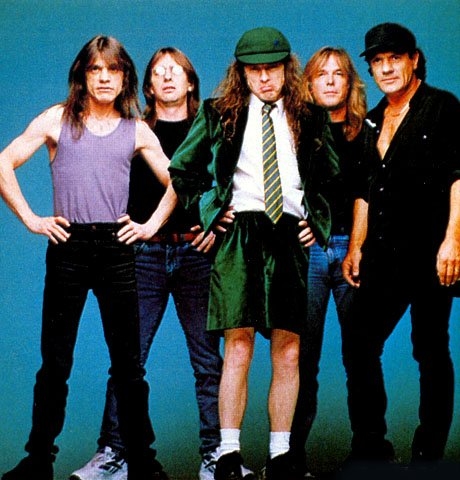
History Of Ac/Dc


AC/DC is an Australian hard rock band formed in Sydney in 1973 by brothers Malcolm and Angus Young. Although the band members are considered pioneers of heavy metal,[1][2] they have always classified their music as "Rock n' roll".[3]

AC/DC underwent several line-up changes before releasing their first album, High Voltage, in 1975. Membership remained stable until bassist Mark Evans was replaced by Cliff Williams in 1977. In 1979, the band recorded their highly successful album Highway to Hell. Lead singer and co-songwriter Bon Scott died on 19 February 1980, after a night of heavy alcohol consumption. The group briefly considered disbanding, but soon ex-Geordie singer Brian Johnson was selected as Scott's replacement. Later that year, the band released their best-selling album, Back in Black.

The band's next album, For Those About to Rock We Salute You, was also highly successful and was their first album to reach number one in the United States. AC/DC declined in popularity soon after drummer Phil Rudd was fired in 1983 and replaced by future Dio drummer Simon Wright. Poor record sales continued until the release of The Razors Edge in 1990, the only studio album to feature Wright's replacement Chris Slade. Phil Rudd returned in 1994 (after Slade was asked to leave in favour of him) and contributed to the band's 1995 album Ballbreaker. Stiff Upper Lip was released in 2000 and was well-received by critics. The band's most recent album Black Ice was released on 20 October 2008.[4]

AC/DC has sold more than 200 million albums worldwide,[5] including 71 million albums in the United States.[6] Back in Black has sold an estimated 42 million units worldwide[7] and 22 million in the United States alone, where it is the fifth highest-selling album.[8] AC/DC ranked fourth on VH1's list of the "100 Greatest Artists of Hard Rock"[9] and the seventh "Greatest Heavy Metal Band Of All Time" by MTV.[10] In 2004, the band was ranked number 72 in the Rolling Stone list of the 100 Greatest Artists of All Time.

History Of Iron Maiden


Iron Maiden were formed on Christmas Day 1975, by bassist Steve Harris, shortly after he left his previous group, Smiler. Harris attributes the band name to a movie adaptation of The Man in the Iron Mask from the novel by Alexandre Dumas, and starring Patrick McGoohan (who also starred in the 1960s series The Prisoner) which he saw around that time, and so the group was christened after the purported torture device.[5]

Steve Harris and guitarist Dave Murray remain the longest-surviving members of Iron Maiden. Original vocalist Paul Day was fired as he lacked "energy or charisma onstage".[6] He was replaced by Dennis Wilcock, a Kiss fan who utilised fire, make-up and fake blood during live performances. Wilcock's friend, Dave Murray, was invited to join, to the frustration of guitarists Dave Sullivan and Terry Rance.[7] This fueled Harris to temporarily split the band in 1976,[7] though the group reformed soon after with Murray as the sole guitarist.

Iron Maiden recruited another guitarist in 1977, Bob Sawyer, who caused a rift between Murray and Wilcock, prompting Harris to fire both Murray and Sawyer.[8] A poor gig at the Bridgehouse in November 1977, with a makeshift line-up including Tony Moore on keyboards, Terry Wapram on guitar, and drummer Barry Purkis resulted in Harris firing the entire band.[9] Dave Murray was reinstated and Doug Sampson was hired as drummer.

\\m// History of the Legendary Metal Band METALLICA \\m//

Friday, December 12, 2008


Metallica was formed in Los Angeles, California, in early 1981 when drummer Lars Ulrich placed an advertisement in a Los Angeles newspaper—The Recycler—which read "Drummer looking for other metal musicians to jam with Tygers of Pan Tang, Diamond Head and Iron Maiden."[5] Guitarists James Hetfield and Hugh Tanner of Leather Charm answered the advertisement. Although he had not formed a band, Ulrich asked Metal Blade Records founder Brian Slagel if he could record a song for the label's upcoming compilation Metal Massacre. Slagel accepted, and Ulrich recruited Hetfield to sing and play rhythm guitar.[5]

Ulrich talked to his friend Ron Quintana, who was brainstorming names for a fanzine. Quintana had proposed the names Metal Mania and Metallica. Ulrich used Metallica for the name of his band. A second advertisement was placed in The Recycler for a position as lead guitarist. Dave Mustaine answered, and, after seeing his expensive guitar equipment, Ulrich and Hetfield recruited him. In early 1982, Metallica recorded its first original song "Hit the Lights" for the Metal Massacre I compilation. Hetfield played bass on the song and Lloyd Grant was credited with a guitar solo.[5] Released on June 14, 1982, early pressings of Metal Massacre I listed the band incorrectly as "Mettallica". Although angered by the error, Metallica managed to create enough "buzz" with the song and the band played its first live show on March 14, 1982, at Radio City in Anaheim, California with newly recruited bassist Ron McGovney.[6] Metallica recorded its first demo, Power Metal, a name inspired by Quintana's early business cards in early 1982. In the fall of 1982, Ulrich and Hetfield attended a show at the nightclub Whisky a Go Go which featured bassist Cliff Burton in a band called Trauma. The two were "blown away" by Burton's use of a wah-wah pedal and asked him to join Metallica. Hetfield and Mustaine wanted McGovney out as they thought that he "didn't contribute anything, he just followed."[7] Although Burton initially declined the offer, by the end of the year he accepted on the condition the band move to San Francisco. Metallica's first live performance with Burton was at the nightclub The Stone in March 1983, and the first recording to feature Burton was the 1983 Megaforce demo.[7]

Metallica was ready to record its debut album, but when Metal Blade was unable to cover the additional cost, the band began looking for other options. Concert promoter Johnny "Z" Zazula, who had heard the 1982 No Life 'til Leather demo, offered to broker a record deal with Metallica and New York City-based record labels. After receiving no interest from various record labels, Zazula borrowed the money to cover the record's recording budget and signed Metallica to his own label, Megaforce Records.[8] Band members decided to kick Mustaine out of the band due to drug and alcohol abuse, and violent behavior.[9] Exodus guitarist Kirk Hammett flew in to replace Mustaine the same afternoon. Metallica's first show with Hammett was on April 16, 1983, at the nightclub The Showplace in Dover, New Jersey.[7]

Mustaine has expressed his dislike for Hammett in interviews. He said Hammett "stole my job, but at least I got to bang his girlfriend before he took my job — how do I taste, Kirk?"[10] Mustaine was "pissed off" because he believes Hammett became popular by playing the guitar leads that Mustaine wrote.[11] In a 1985 interview with Metal Forces, Mustaine slammed Hammett saying, "it's real funny how Kirk Hammett ripped off every lead break I'd played on that No Life 'til Leather tape and got voted No. 1 guitarist in your magazine."[12] On Megadeth's 1985 debut album Killing Is My Business... and Business Is Good!, Mustaine included the song "Mechanix", which Metallica renamed as "The Four Horsemen" on Kill 'Em All. Mustaine said he did this to "straighten Metallica up", as Metallica referred to Mustaine as a drunk and said he could not play guitar.[12]

\\m// Heavy-Metal \\m//


Heavy metal (often referred to simply as metal) is a genre of rock music[1] that developed in the late 1960s and early 1970s, largely in England and the United States.[2] With roots in blues-rock and psychedelic rock, the bands that created heavy metal developed a thick, massive sound, characterized by highly amplified distortion, extended guitar solos, emphatic beats, and overall loudness. Heavy metal lyrics and performance styles are generally associated with machismo and masculine sexuality.[3]

Early heavy metal bands such as Led Zeppelin, Black Sabbath, and Deep Purple attracted large audiences, though they were often critically reviled, a status common throughout the history of the genre. In the mid-1970s, Judas Priest helped spur the genre's evolution by discarding much of its blues influence; Motörhead introduced a punk rock sensibility and an increasing emphasis on speed. Bands in the New Wave of British Heavy Metal such as Iron Maiden followed in a similar vein. Before the end of the decade, heavy metal had attracted a worldwide following of fans known as "metalheads" or "headbangers".

In the 1980s, glam metal became a major commercial force with groups like Mötley Crüe. Underground scenes produced an array of more extreme, aggressive styles: thrash metal broke into the mainstream with bands such as Metallica, while other styles like death metal and black metal remain subcultural phenomena. Since the mid-1990s, popular styles such as nu metal, which often incorporates elements of funk and hip hop; and metalcore, which blends extreme metal with hardcore punk, have further expanded the definition of the genre.